4, Hot Springs CapitalMoree Moli Town.
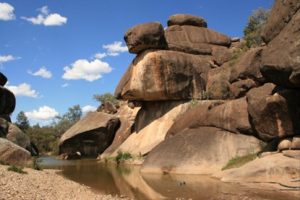
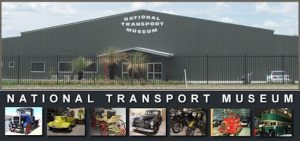
Leaving the sapphire city of Inverell, along the Gwydir Highway for 142 kilometers, you will arrive at Moree, the natural hot spring capital of New South Wales. On the way, you can also visit three attractions: National Transport Museum, Cranky Rock Nature Reserve, and Stahmann Pecan Nut Farm, the largest pecan plantation in Australia (reservation required in advance). When you arrive in Moree, you must visit George, an old overseas Chinese who has lived in the area for more than 30 years. He runs a Chinese restaurant and a hot spring hotel in Moree. He is now a district councilor of Moree. Two years ago, he challenged for the mayoral election, but unfortunately lost by one vote.
Jasmine was gazetted as a town in 1862. The Weraerai and Kamilaroi Aboriginal people were the earliest inhabitants of the area and their descendants still live here today. After jailbreak convict George Clark tells a story about a great river called Kindur in 1832, Major Thomas Mitchell travels to the area at the request of the acting governor. From 1826 to 1831 Clark lived with the Kamilaros in the Southland. Soon, squatters followed Mitchell to establish ranches, and in 1851, Englishmen James and Mary Bland arrived and in 1852 built a general store on the riverbank. The following year another post office was added. In 1857 the family sold all their possessions and moved to the Hunter area, but James died in 1858, leaving Mary with six children, so she returned to open another business, and in 1861 she opened the town's first inn.
The first local petty court was established in 1863, and a severe flood occurred in 1864. The first policeman arrived, and a police station was established in 1865. The first church (Wesleyan) was built in 1867 when there were only 43 people in the town. As settlement deepened, agriculture became a prosperous industry on the fertile black soil plains. Banking began in 1876 and the first local newspaper was published in 1881, when the population was 295. The word "Moree" comes from the Kamilaroi language and is thought to mean "long puddle" or "rising sun". In 1895, the Great Artesian Basin beneath Murraytown was developed, producing more than 13 trillion litres of water per day. In order to provide water for agricultural production, the drilling depth reached 910 meters underground. And underground hot springs were discovered.
In 1897, Sydney opened rail services, and now there are daily flights and trains to Moray. The town is located at the junction of the Newell Highway and the Gwydir Highway, 626 kilometers from Sydney. In the 2018 census, Moray had a population of less than 10,000.

Jasmine is a major agricultural centre, best known for its role in Australia's cotton growing industry, which was established in the early 1960s. Jasmine is home to underground Artesian aquifer springs renowned for their therapeutic properties. Therefore, hot spring themed tourism has become the biggest feature of the area. In addition, during the cotton flowering and harvesting season from April to May every year, endless cotton fields can be seen on both sides of the road, and the cotton is blown by the wind like snow. However, due to the confrontational relationship between Australian Aborigines and the government, local security is a major problem. Especially at night, you must pay attention to safety and do not park your car outside the hotel.
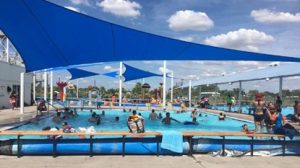
The largest and best-equipped spa in the area is Artesian Aquatic Centre.
Admission fee is $9 per person, no time limit. In addition to the natural hot spring, there are also saunas, gyms, massage spas, water parks, etc. The opening hours are from 6:00 am to 7:00 pm every day, with a break from 12-2:00 pm. For more information, please visit the official website: www.maacltd.com
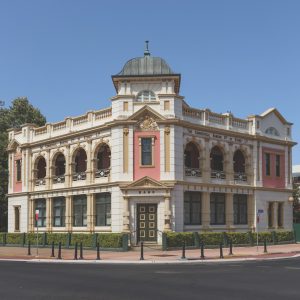
In addition, there are some old buildings in the town, such as the Bank Art Museum, the largest wetland bird watching park in New South Wales, Gwydir Wetland, the Big Plane Amaroo Tavern (a real plane given to New Guinea by the Australian government in 1975), Mary Brand Memorial Park, Moree Information Centre, which sells local specialty agricultural products and pecan nut sightseeing tours, etc.