After leaving Port Stephens, we entered Newcastle, the second largest city in New Zealand.Newcastle.,
It is also the seventh largest city in Australia. The population in 2020 is estimated to be 450,000. Built around a large harbour, Newcastle is located at the mouth of the Hunter River, one of Australia's largest active harbours, and is about 2.5 hours drive from Sydney. Newcastle is the world's largest coal export terminal, with coal exports accounting for more than 90% of the port's total tonnage throughput, handling more than 100 million tonnes of coal annually, most of which is exported to China and Japan. In the southern suburbs there is Lake Macquarie, Australia's largest coastal saltwater lake; in the north there is Port Stephen's, a harbour famous for its surfing; and in the west there is Hunter Valley, a centuries-old wine-producing mecca. To the west is the Hunter Valley, a centuries-old wine-producing mecca.) The city is home to Newcastle University, which is ranked in the top 10 in Australia. In terms of sports, the city is home to the Newcastle Jets FC, an Australian Football League A team.
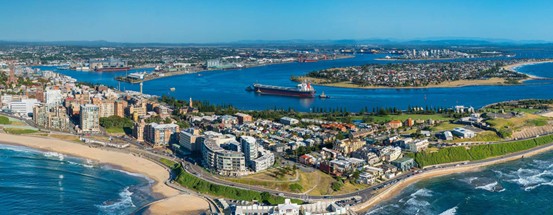
Newcastle is the second oldest city in New Zealand, and is home to the Aboriginal community.Avabaca(Awabakal) andWorimi(The area is inhabited by the Worimi people, who call it Malubimba., John Shortland(John Shortland) was the first European to explore the area. He was in pursuit of several men fromSydney CoveThe area was accidentally discovered by criminals who stole a ship and then took the time toGovernor of New South WalesJohn Hunter.(He named it after John Hunter. On his return trip, he reported to his superiors that there was a deep-water harbour, and thata coal mineRich in content. Over the next two years, the coal mined at the site became the first export cargo from NSW.
Because the most dangerous criminals were sent to mine, and as a punishment for their crimes, Newcastle became known as a hellhole. By the early 19th centuryHunter RiverThe estuary has been regularly visited by all kinds of people, including coal miners,woodsmanand more escaped criminals. The then Governor of New South WalesPhilip Gidley King(Philip Gidley King has decided to be more proactive in mining localNatural ResourcesIn 1901, an inmate camp called King's Town was established. The camp operated for only a few months before closing and reopening in 1804, cf.Cities of the same name in the United Kingdomand was officially renamed Newcastle.
Newcastle remained a convict colony until 1822, when it was opened to the public.cultivationStop.
World War IIDuring this period, Newcastle was Australia's industrial centre, and in the early morning hours of 8 June 1942, theJapanese Imperial Army(used form a nominal expression)The 21st submarine.The shelling of Newcastle damaged facilities including shipyards, steel mills and other civilian buildings.
Newcastle remains the commercial centre of the Hunter Valley region, with 95.8 million tonnes of coal exported from the Port of Newcastle each year, 90.8 million tonnes of which is exported, making it the world's largest exporter.
Merewether Beach, one of Australia's National Surfing Reserves, hosts the annual Surfest surfing competition in February, where Mark Richards has ridden the waves and won four world championships. Mark Richards is a four-time World Surfing Champion.
Newcastle is home to a wide range of food venues, from award-winning restaurants such as Subo to bars and alfresco cafes. Sip a cocktail at one of Honeysuckle's many harbourside restaurants or bars, or head to Hamilton's Beaumont Street for an alfresco cafe. Cooks Hill's Darby Street has a rich Bohemian flavour, with quirky boutiques, bookshops and cafes, ideal for a hearty late breakfast.
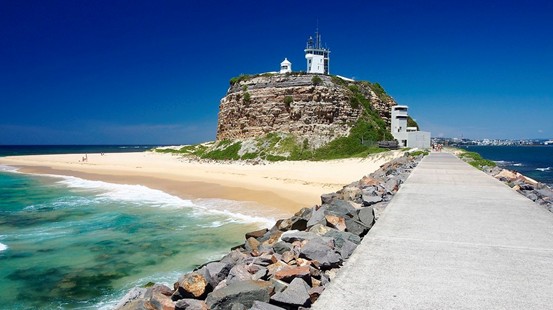
Thrill-seekers can experience skydiving near Newcastle. You can also take a heritage tour up to the Fort Scratchley Historic Site, which offers spectacular views of the harbour and the vast expanse of the Pacific Ocean. During the annual whale migration season, Nova Cruises will bring you close to the humpback whales as they roll through the blue waters.
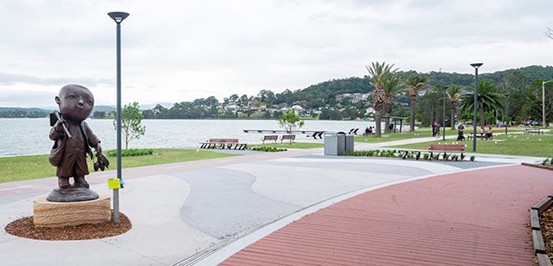
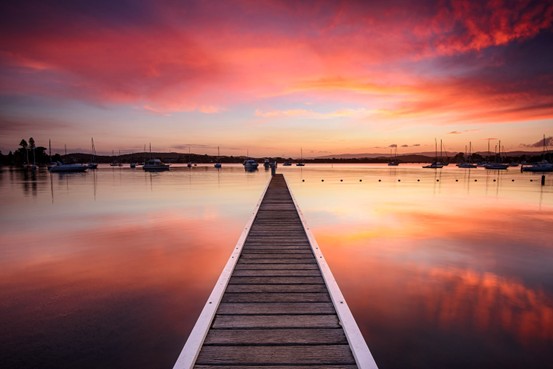
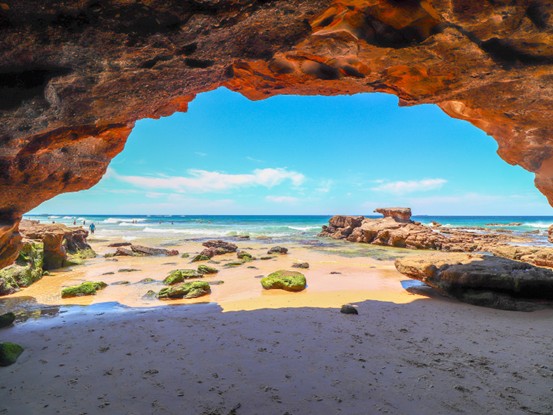
Lake Macquarie, Australia's largest coastal saltwater lake, is a 30-minute drive south of Newcastle. With twice the volume of Sydney Harbour, it's easy and lucky to enjoy epic sunrises and sunsets over the water at Lake Macquarie. Lake Macquarie's most popular sunrise attraction is Cave Beach. Watching the sun rise above the ocean, surrounded by ancient rock arches, is a truly magical experience. At sunset, head to the eastern shore of the lake. Particularly beautiful places to visit include Belmont and Valentine, lakeshore areas such as Warners Bay and scenic Toronto, Swan Sea and Swan Bay for fishing and holidays. It is also the best place to drive around on weekends.
Local tours also include.
- Hands On Beginner Beekeeping Class, Honey Guided Tours,
- Half-hour helicopter ride.,
- Watagans National Park forest walks.,
- Warners Bay Red Bluff Boardwalk, Warner Bay.
- Lake Macquarie City Art Gallery, Lake Macquarie,
- Lake Macquarie Cruise Tour.
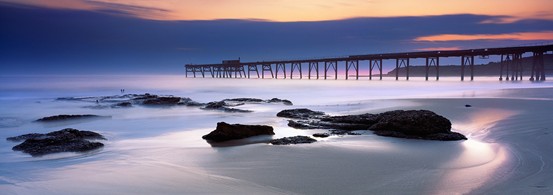
Last but not least, we would like to introduce Catherine Hill Bay to you, which is a New South Wales Heritage Area, the whole town is listed in the Australian National Heritage. Although this area has not been developed in the past 150 years, it has been the location of seven television series and has been rated as one of the top 5 most beautiful beaches in Australia. Catherine Hill Bay is a coastal bay and village on the Lake Macquarie Peninsula, located in the southern part of the Swansea Pacific Entrance Channel in New South Wales. The village is the oldest continuous settlement in the Lake Macquarie cities. The Abakas, the indigenous people of the area, were the first inhabitants of the land, and there is a surf club overlooking the beach, where the coal promenade wharf is a popular recreational site for design students and sunrise and sunset watchers. The colony was established on 1 April 1865 with the purchase of land, and in 1873 the New Wallsend Company founded the town of Cowper as a coal mining site, with the first shipment of coal being made on 17 December of that year. The name Catherine Hill is used to honour the sailing ship Catherine Hill, which ran aground in 1867.
Initially, coal was transported to the docks by rail, but this was later changed to a system of trucks and self-loading belts.
Later, the Wallarah Coal Company mined and transported coal from the area, including the nearby Crangan Bay Mine. This was taken over by the Coal and Allied Group.