Day 1
Sydney~Beijing
Meet at Sydney International Airport at 5:30pm and take Air China flight CA174 to Beijing at 7:40pm (or depart directly from Beijing)
Day 2
Beijing - Almaty - Kazakhstan
Arrive at Beijing Airport Hotel at 5:25 AM, fly from Beijing Daxing Airport to Almaty, the largest city in Kazakhstan, at 6:40 PM, arrive at 9:40 PM, pick up at the airport and check in to a 4-star hotel in the city. The former capital of Kazakhstan is located in the southeast of Kazakhstan, 650-950 meters above sea level. It was the only way for ancient China to pass through the Silk Road to Central Asia. To the east is China, facing the Tianshan Mountains, with a pleasant climate and beautiful environment. It is a garden city with abundant apples (known as the Apple City). With a population of about 1.4 million, it is the largest trade center in Central Asia, a center of finance, technology, education and culture, and a place where European and Asian cultures converge. It is the greenest city in the world, a perfect combination of the beauty of nature and a modern metropolis.
Day 3
Almaty city tour
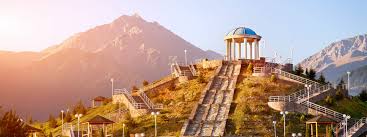
Almaty city tour: Kazakhstan Museum, Independence Monument, PANFILOUV 28 Heroes Park, ZENKOV Cathedral, Green Bazaar, Almaty Metro Experience Visit: Medeo Mountain, the best Qimbulak Ski Resort in the Tianshan Mountains, take three cable cars to the top, you can touch the glacier in summer! After dinner, head to ARBAT Pedestrian Street to enjoy street performances by folk artists! Taste Kazakh specialties Navat dinner. Stay at the same hotel. (BLD)
Day 4
CHARYN CANYON - KOLSAY LAKE, TIANSHAN MOUNTAINS - SATY VILLAGE
After breakfast, we will take a bus to Charyn Canyon, a famous natural landscape comparable to Colorado in the United States. Charyn Canyon National Park is known as the Little Colorado Grand Canyon and is the third largest canyon in the world. A 210-kilometer drive from downtown Almaty will take you to the entrance of the Charyn Canyon scenic area. It is regarded as the incarnation of Ablai Khan, the most famous Khan in ancient Kazakh nation, who once unified the various tribes of ancient Kazakh nation. Because the rocks here are all red, it is called Red Charon. Afterwards, we will head to Kazakhstan - Kolsay Lakes. Kolsay Lakes are three beautiful alpine lakes located at the northern foot of the Tianshan Mountains, at an altitude of approximately 1,800, 2,250 and 2,700 meters respectively. They are known as the three pearls of the Tianshan Mountains and are a popular tourist attraction around Almaty, Kazakhstan. Accommodation at Sad Village Hotel. (BLD)
Day 5
High mountain barrier lake Kaindy Songbai Lake
After breakfast, visit Kaindy Lake, one of the ten must-see sights in Kazakhstan. It is a high mountain barrier lake formed by an earthquake and is famous for its inverted pine and cypress trees. Kaindy Lake is an idyllic mountain lake in the Tianshan Mountains, close to Almaty. The lake was formed after an earthquake in 1911, which triggered a large landslide and actually formed a natural dam lake. After lunch, return to Almaty five-star hotel to rest and enjoy Chinese dinner (BLD).
Day 6
Bishkek - the capital of Kyrgyzstan
Bishkek - the capital of Kyrgyzstan. Take a bus along the Tianshan Mountains for 300 kilometers and reach Bishkek through the land port. In the afternoon, visit the city of Bishkek - Manas Square, Second Victory Road Square, and the museum! Check in to a 4-star hotel in the city. Central Asian specialty dinner (BLD)
Day 7
The birthplace of Li Bai, a famous Tang Dynasty poet - Suyab - Rehai - Issyk Kul Lake
Proceed to the birthplace of Li Bai, a famous Tang Dynasty poet. Suyab, now the site of Ak Beshim, is located 8 kilometers southwest of Tokmok, Kyrgyzstan, on the south bank of the Chu River. It was an important town established in the Western Regions in the first year of Tiaolu (679 AD) during the reign of Emperor Gaozong of the Tang Dynasty of China. It is also an important town on the Silk Road and is said to be the birthplace of the famous poet Li Bai. It was known as one of the "Four Anxi Towns" in the Tang Dynasty along with Qiuci, Shule and Yutian. Arrive at Rehai-Issyk-Kul Lake in the afternoon and visit! It was called Tianchi in the Han Dynasty of China, Rehai and Daqingchi in the Tang Dynasty, Temurtunoer and Tuschi in the Qing Dynasty. It is located in the northeastern part of Kyrgyzstan, on the north side of the Tianshan Mountains, at 42 degrees 30 minutes north latitude and 77 degrees 30 minutes east longitude. It is 182 kilometers long, 60 kilometers wide at its widest point, covers an area of 6,332 square kilometers, and has a catchment area of 22,080 square kilometers. The average lake surface is 1,602 meters above sea level and the deepest is 702 meters. It is the second largest alpine lake in the world. Stay at Issyk-Kul Hotel. (BLD)
Day 8
Bishkek - Fly to Tashkent - the capital of Uzbekistan
After breakfast, return to Bishkek and take a late flight to Tashkent, the capital of Uzbekistan. Tashkent is one of the important commercial hubs on the ancient "Silk Road", and the famous "Silk Road" passes through here. Zhang Qian, Faxian and Xuanzang from ancient my country all left their footprints there. It has a temperate continental climate with mild winters, hot summers, little precipitation and plenty of sunshine. It is known as the "City of the Sun". The city is divided into 11 districts. The city center is the seat of the administrative organs of Uzbekistan and the city, and is also a commercial and cultural area. Tashkent means Stone City in Uzbek and has a history of 2,500 years. Tashkent is divided into the new city and the old city. Most of the mosques, mausoleums and other historical sites are concentrated in the old city. Check in to Tashkent five-star hotel and enjoy Chinese dinner (BLD).
Day 9
Tashkent city tour
After breakfast, visit Charsu Bazaar, Imam Mosque, National Museum, Tashkent Pilaf Center, etc. in Tashkent city. It is one of the museums with the richest collection of national art in Uzbekistan. The museum not only houses a large number of exquisite embroidery, carpet crafts, copper utensils, wood carvings, etc. with Uzbek national characteristics, but also authentic art works from China, India, Japan and other countries. The works of the famous Chinese painter Qi Baishi are also on display. Stay at the same hotel.(BLD)
Day 10
The ancient city of Khiva, Uzbekistan
Take an early flight to the ancient city of Khiva, and after breakfast, take a flight to the ancient city of Khiva in Uzbekistan - a product of the Soviet protection project in the 1970s and 1980s, it is now a creaky but clean official "city museum": Ichon-Qala gate and wall; Kuhna ark - it was the fortress and palace of the Khiva ruler himself, originally built in the 12th century and expanded in the 17th century: summer mosque, fortress. Mohammed Rakhim Khan Madrasah - named after the Khan who surrendered to the Russians in 1873. Kalta Minor minaret; Juma Mosque; Alok Khan Madrasah; Tosh-Hovli Palace - this palace is called "Stone House" and its interior decoration is the most luxurious in Khiva. It was built by Alok Khan in 1832-1841. The Pahlavon Mahmud Mausoleum is the most beautiful attraction in the city. The owner of the mausoleum was a poet, philosopher and legendary wrestler, and also the patron saint of Khiva. The mausoleum was built in 1326 and was later requisitioned by the then Khan as a royal mausoleum in 1913. Check in at a 4-star hotel in Khiva. (BLD)
Day 11
World Heritage Site Konye-Urgench, Turkmenistan
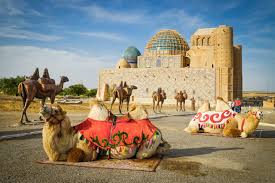
Enter Turkmenistan After breakfast, drive to Kunya-Urgench (formerly known as "Gurganj"), the capital of the ancient Khwarazm Empire and one of the important trading cities of the Silk Road in Central Asia. It is located on the northern branch of the Silk Road (leading to the Caspian Sea and Russia). The ancient country of Khwarazm has been an important oasis in the Central Asian desert for thousands of years. After arrival, visit the Mausoleum of Turabek Hanum, Mausoleum of Sultan Tekesh - Tekesh was the king of Khwarazm in the 12th century, he expanded the territory of Khwarazm to Khorasan in the south (today's northern Iran and northern Afghanistan); Mamun II Minaret - the minaret was built in 1011, razed to the ground by the Mongols and rebuilt in the 14th century, but destroyed again by the earthquake in 1895; Mausoleum of II-Arslan - the conical vault has a strange brick pattern, II Arslan who died in 1172 was the father of Tekesh; Kyrk Molla - (40 Mullah Mountain), it is the holy place where the residents of Kunya-Urgench fought the final battle with the Mongols. Then we will drive to Dashoguz and check into a 4-star hotel to rest. (BLD)
Day 12
Derweze - "Gate of Hell" - Ashgabat, capital of Turkmenistan
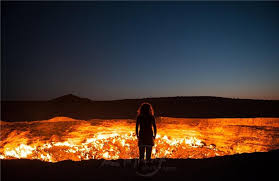
Drive to Darvaza. There is abundant natural gas in the area near Darvaza, and there are three natural gas pits: one of which has been ignited, one is a water pit, and one is a mud pit; the fire burning in the pit has never been extinguished for more than 40 years, and because it looks like the legendary entrance to hell, people call it the "Gate of Hell" - in 1971 when geologists were drilling, they accidentally discovered an underground cave full of natural gas. A piece of soil under the drilling device collapsed, leaving a large hole with a diameter of about 50-100 meters. In order to prevent the leakage of toxic gases, they decided to ignite the leaked natural gas. Prepare BBQ in Darvaza at night, because the Gate of Hell is more beautiful after dark, and stay in a nearby characteristic tent hotel. (BLD)
Day 13
World Cultural Heritage - Nisa Ruins - Great Mosque - Ashgabat City Tour
After breakfast, drive to Ashgabat, the capital of Turkmenistan, to visit the World Cultural Heritage Site of Nissa, which was the capital of Parthia in the 3rd century BC. Afterwards we will go to Kipchak Village to visit the largest mosque in Turkmenistan and the mausoleum of former President Niyazov. Then return to the city for sightseeing: the Neutrality Gate (built to celebrate the Turkmen people's unanimous agreement on the neutrality policy in 1998). On the top of the Neutrality Gate there is a 12-meter-high gilded statue of Niyazov, which can rotate in the direction of the sun and always point to the sun. Independence Square (including buildings such as Turkmenbashi Palace, Ministry of Justice, Ministry of Defense, Ruhyyet Palace), Earthquake Monument, Soviet War Memorial, Presidential Administration Building (exterior), Ashgabat State University (exterior), Presidential Trail, Independence Square, National Museum, Cultural Square. After dinner, check in to a 4-star hotel and rest (BLD)
Day 14
Border city Mary - Turkmenabat
Drive to the border city of Mary, the capital of Turkmenistan's Mary Province, close to the Afghan border, with the ancient city of Merv on its outskirts. Mary was occupied by Russia in 1884, which triggered the Panjdeh incident and almost led to a war between Britain and Russia. The following year, the two sides reached an agreement and Mary belonged to Russia. Mary's economy was originally based on cotton planting. After the discovery of natural gas in 1968, it became a major mining town. It is now the fourth largest city in Turkmenistan and one of the important foreign trade ports. In the afternoon, we went to Abad, the second largest city in Turkmenistan, formerly known as Chalju. It is a city in eastern Turkmenistan and the capital of Lebap Province. Located on the banks of the Amu Darya River, close to the border with Uzbekistan. Check in to a 4-star hotel for rest (BLD)
Day 15
Re-enter Uzbekistan - Central Asian historic city - Bukhara
After breakfast, we will go to the border between the two countries, handle the entry and exit formalities, and enter Uzbekistan. In the afternoon, we will go to Bukhara, a famous historical city in Central Asia. Bukhara was once one of the important cities on the ancient Silk Road. It played an important role as a bridge in the trade and cultural exchanges between the East and the West. Many market trade sites of that time are still preserved. In the 7th century, as Islam began to spread and prevail in Bukhara, thousands of mosques, seminaries and other places of worship were built in Bukhara, making it a famous Islamic academic center at that time. Check in to a 4-star hotel and rest (BLD)
Day 16
Bukhara city tour
After breakfast, visit the city of Bukhara: Samani Mausoleum; Chashma Ayub Mausoleum, Poi Kalon Complex, a world cultural heritage site: Mir-i-Arab Madrasah; -maghoki-Attar (in the 1930s, archaeologists discovered a Zoroastrian temple and the remains of an early Buddhist temple built in the 5th century and destroyed by Arabs. It is said that before the 16th century, the Jews of Bukhara used this mosque as a synagogue for evening gatherings); Ulugbek Madrasah Square, Kukeldash Madrasah; the royal city within the city - Ark Castle. In the afternoon, visit the Emir's Summer Palace and the Chor-Bakr Mausoleum City, a world cultural heritage site. After dinner, we will go to Nadir Devanbegi Madrassah to watch ethnic performances. Check in to a 4-star hotel for rest (BLD)
Day 17
Samarkand, a World Cultural Heritage Site and an Ancient Capital of the Silk Road
After breakfast, drive to Samarkand, the ancient capital of the Silk Road with a history of more than 2,500 years. After lunch, visit the city of Samarkand, which seems like a mythical city in One Thousand and One Nights: Guri Amir Mausoleum, Registan Square (translated as "Sand"), Bibi Khanym Mosque, and Shah-i-Zindar Mausoleum. Overnight at a 4-star hotel in Samarkand (BLD).
Day 18
Shahrisabz - Border city Termez
After breakfast, we will drive to Shahrisabz, the hometown of the great Timur, which means "Green City": Ak-Saray Palace* (tour for about 20 minutes) - the ruins of Timur's summer palace; Dor-utSaodat complex (tour for about 30 minutes): Khazrati-Imam Mosque built in the 14th century, Kok- Gumbaz Mosque, which has a very appropriate name "Blue Dome". In the afternoon, we will arrive at the border city of Termez. Check in to a 4-star hotel for rest (BLD)
Day 19
Tajikistan - Termez - Dushanbe, the capital of Tajikistan
Enter Tajikistan to visit the charm of Termez. Fayaz Tepe Monastery is a 3rd century Buddhist monastery that was only discovered in 1968. Its shape is very different from the symmetrical Han Buddhist temples in my country. Only the foundation remains today. The temple extends from the main hall to the two wings with many courtyards, which has a bit of a maze feel. In recent years, it is being gradually rebuilt with the help of UNESCO. Then head to Dushanbe, the capital of Tajikistan. Upon arrival, check in to a 4-star hotel and rest. (BLD)
Day 20
Dushanbe City Tour
Dushanbe City Tour Dushanbe City Sightseeing: Somoni Square and Rudaki Park, where you can see the statue of Abdullah Rudaki, known as the "Father of Persian Poetry", the Presidential Palace of Tajikistan, and the statue of Somoni, known as the "Father of the Tajik Nation". Haji Yakoub Mosque is a Dushanbe landmark. National Museum of Antiquity of Tajikistan. National Museum of Tajikistan, visit the ruins of Hisar Fortress in the afternoon, and take the evening flight (take off at 01:50 in the morning) to Beijing. (BLD)
Day 21
Beijing Jiuhuashan Hot Spring
The flight arrived in Beijing in the morning. After the airport pick-up, we were sent to the local Jiuhuashan Villa Hot Spring Hotel. Jiuhua Villa covers an area of more than 2,000 acres. It is a garden-style resort hotel with more than 2,300 rooms of different styles and nearly 5,000 beds; more than ten restaurants with different flavors and more than 9,000 seats. Jiuhua Villa has a variety of hot springs, entertainment and sports activities. Jiuhua Hot Spring Palace covers an area of 100 acres and is China's largest and most distinctive hot spring theme park. The palace is shaded by trees and has a changing scenery. There are nearly 100 hot spring pools of various sizes, as well as open-air hot spring swimming pools, indoor hot spring swimming pools and other facilities. It is a collection of ancient and modern Chinese and foreign bathing culture classics, providing special hot spring bathing, hot spring medicinal bathing, hot spring sauna and various health care and beauty services. (Including hot spring admission, individual activities, meals and drinks are provided by yourself)
Day 22
Wangfujing District, Beijing
After breakfast at the hotel, you will have free time at the hot spring hotel until 2pm. Then you will be taken to Beijing Wangfujing District, where you can freely visit Tiananmen Square, Wangfujing Pedestrian Street, the Imperial Ancestral Temple, Oriental Plaza, etc. You can enjoy the famous Quanjude Roast Duck for dinner at your own expense. Then you will be taken to the airport to take flight C173 back to Sydney or other Australian cities.
Day 23
Fly back to Australia
Flight C173 takes off at 01:10 AM and arrives in Sydney at 2:50 PM. (You can also stay in Beijing at your own expense, please contact us)